Archive
- January (24)
- February (19)
- March (22)
- April (20)
- May (19)
- June (20)
- July (18)
- August (20)
- September (18)
- October (23)
- November (20)
- December (19)
Peak Gas: A Forecasting Failure of Henry Groppe Jr.
By Robert Bradley Jr. -- July 7, 2023“Color me confused…. Henry Groppe Jr. missed badly with natural gas in the crucial 1980s. I thus invite anyone to challenge my account.”
Last month I visited the Permian Basin Petroleum Museum (highly recommended!) located in Midland, Texas. The exhibits and educational features–in room after room–were exemplary. I learned much and will continue to learn with each visit.
To my surprise, I saw a wall-size tribute to energy consultant Henry Groppe Jr., describing him as a successful, unique seer into the future of oil and gas. This surprised me. In my book Edison to Enron: Energy Markets and Political Strategies (2011), I covered the history of Transco Energy Company, of which Groppe was a board director and consultant with the ear of Transco CEO Jack Bowen. My story was quite different.…
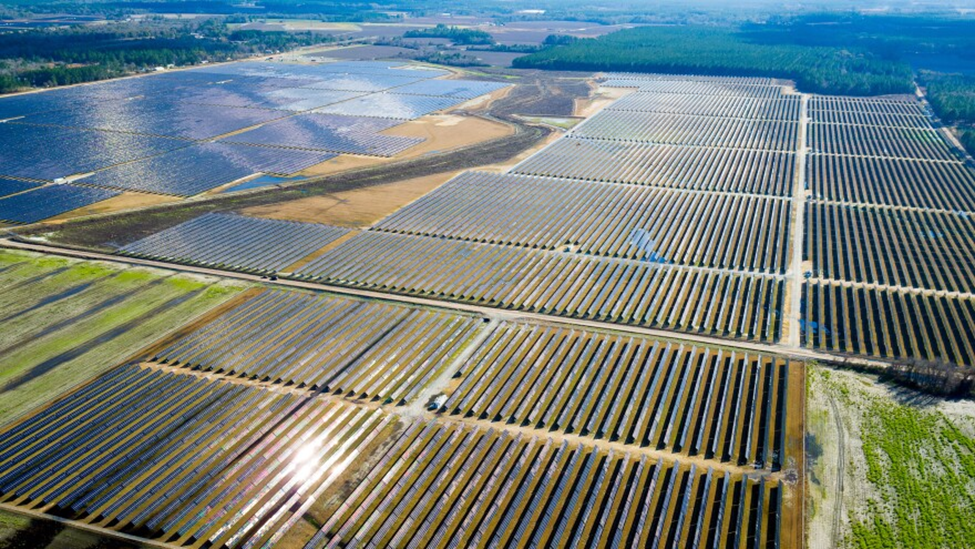
Solar Farm Opposition: Rejoinder to Giberson (2)
By Robert Bradley Jr. -- July 6, 2023“If local government stops destructive intervention emanating from above, so be it. Free-market advocates have noted the advantages of local, decentralized government to this end.”
“Are you just interested in private property rights to help Energy Leviathan? Does your standard also oppose mandatory open access, gas-appliance bans, and other violations of liberty in the name of climate alarmism/forced energy transformation?”
Should neighbors and local government work to nix government-enabled projects on private land, particularly a project that harms the locals as taxpayers and ratepayers; and harms the neighbors with lower property values and nuisances. Giberson says: No matter; private property rights shield all. I say: citizens and neighbors and local government have every right to try to stop Energy Leviathan.
———————–
———————–
Michael Giberson and I have debated the issue in Round One.…
Air Conditioning: Thank You Fossil Fuels
By Robert Bradley Jr. -- July 5, 2023It’s the time of the year when the climate alarmists are out in force, blaming the severity of every heat wave or heat dome on … man-made global warming. I sometimes comment on the dire posts with the simple point: stop whining and turn on the air conditioner, or add a mist machine to your most precious outdoor space.
I heard stories from my father about how, prior to A/C, his parents used to buy blocks of ice that were then placed in front of an electric fan to produced conditioned air. Cool! No whining, but action. Adaptation and, going forward, resiliency.
I was reminded of this when I read a recent recent post at LinkedIn by Frederick Ruehr, most recently with the Georgetown University Law Center, on seven ways our ancestors coped with the heat of summer.…