Solar PV Subsidies: Criticism Mounts (U.C. Berkeley’s Borenstein has had enough)
By Wayne Lusvardi -- October 22, 2014“[T]he evidence is clear that Increased Block Pricing is a key driver behind the distributed solar PV movement in California… The first step to rationalizing California’s electricity rates is to greatly reduce or eliminate increasing-block-pricing.”
“With federal subsidies that pay nearly half the cost of PV — and net metering that pays the residential customer for electricity supplied to the grid at the retail rate rather than the wholesale rate that other renewable generation sources receive – solar PV can beat the high-tier prices of IBP. That’s why solar PV installers are the most vocal opponents of rational rate reform that would call a kilowatt-hour a kilowatt-hour regardless of how many other kilowatt-hours you consume during the month.”
— Severin Borenstein, Director, University of California Energy Institute (September 30, 2014)
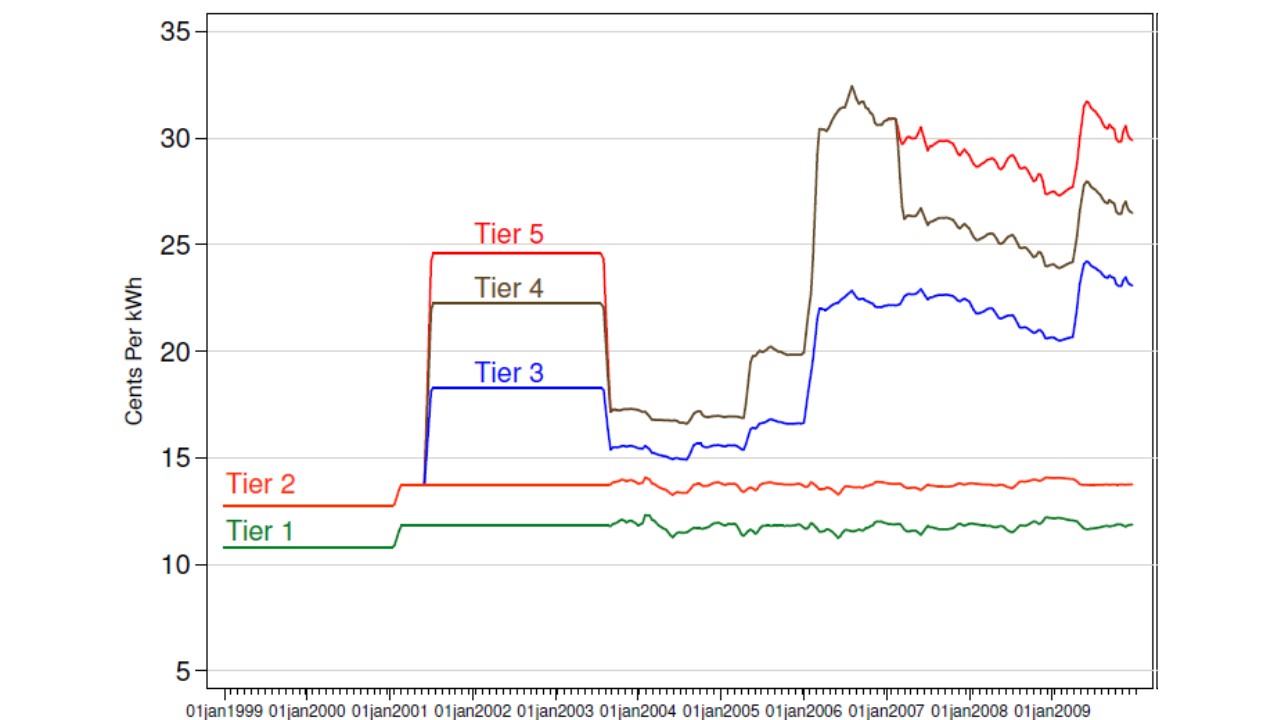
Southern California Edison Rates 1999 to 2009
Tiered electric-rate policies are driving California homeowners that use a lot of electricity into rooftop solar installations and should be ended, says one of California’s top energy experts.…
Continue ReadingAWED Energy & Environmental Newsletter: October 20, 2014
By John Droz, Jr. -- October 20, 2014The Alliance for Wise Energy Decisions (AWED) is an informal coalition of individuals and organizations interested in improving national, state, and local energy & environmental policies. Our basic position is that technical matters like these should be addressed by using Real Science. It’s all spelled out at WiseEnergy.org, which is a wealth of energy and environmental resources.
A key element of AWED’s efforts is public education. Towards that end, every 3 weeks we put together a newsletter to balance what is found in the mainstream media about energy and environmental matters. We appreciate MasterResource for their assistance in publishing this information.
—————————
Greed Energy Economics:
As Hawaii Prepares for Utility Reform, the State’s Solar Industry Sheds 3,000 Workers
The Dumb Ways We Subsidize Renewable Energy
Paying wind developers to not produce electricity, etc.…
Continue Reading
Virginia to Gina: Your Power Plant Rule Is “Arbitrary, Capricious, and Unlawful”
By Robert Bradley Jr. -- October 21, 2014The anti-intellectual, postmodernist arguments for free-lunch/lunch-you-are-paid-to-eat CO2-emission reductions regulation, or in the U.S. EPA’s words, “‘rates will go up, but bills will go down,” sooner or later must hit the shoals of reality.…
Continue Reading